Progressive golf glasses in Scottsdale: the card and the green
How to set up progressive lenses for golf: seeing the ball at address, reading the scorecard and tracking the drive. Advice from Biltmore opticians in Phoenix.
Yes, you can golf in progressive lenses, and plenty of our customers do. The catch is that an everyday progressive puts the reading zone at the bottom of the lens, which is exactly where you look when you stand over the ball. With the right lens design, fitting and frame, you can read the scorecard, see the ball clearly at address and follow your drive down the fairway from one pair.
Can you golf in progressive lenses?
You can golf in progressive lenses, but a standard pair set up for desk work and menus is not always the best pair for the course. When you address the ball, you tilt your head down and look through the lower part of the lens. In a typical progressive, that lower part is focused for reading distance, roughly the distance of a book in your lap. The ball is several feet away, so it can look soft or slightly smeared right when you need it sharp.
Most golfers notice this in one of three ways: the ball looks a little blurry at address, putts feel harder to line up, or they catch themselves lifting their chin to find a clear spot. If any of that sounds familiar, it is not your swing. It is the lens layout.
What your eyes actually do in a round
Golf asks your eyes to cover every distance in a few seconds, which is why it is such a good test of a progressive.
- Far: picking a target, tracking the ball in flight, spotting the flag on a long par 4.
- Middle: the ball at address, the line of a putt, the cart's GPS screen.
- Near: the scorecard, a rangefinder readout, a phone with a tee time on it.
An everyday progressive gives the most room to far and near. On the course, the middle distance does a lot of the heavy lifting. That difference is the whole story behind most golf complaints we hear at the counter.
How we set up progressives for the course
There is no single golf lens that suits everyone, so we start with questions. How often do you play? Do you walk or ride? Do you keep score on paper or on your phone? Do you need to read anything at all during the round, or would you rather keep a pair of readers in the bag? The answers point to one of a few approaches.
A design that favors distance and middle
Progressive designs are not all laid out the same way. Some give more of the lens to distance and middle and keep the reading area smaller and lower. For a dedicated golf pair, that trade is often a good one: the ball stays clear at address, and you still have enough near vision for a scorecard if you drop your eyes a little further. Freeform designs, like the ZEISS progressives we fit, can also take your frame's tilt and wrap into account, which helps when a sport frame curves more than your everyday pair.
Fitting height matters more than usual
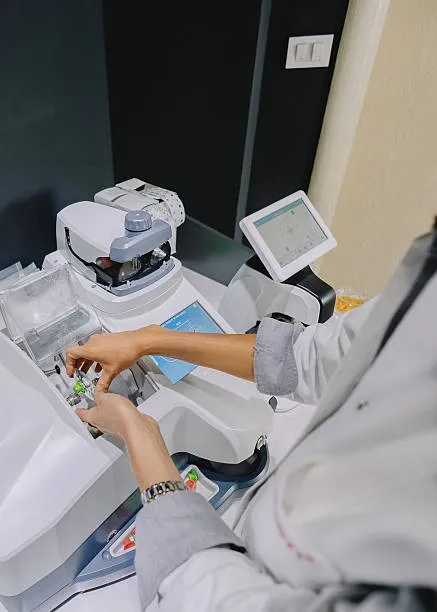
Where the zones land on your face depends on the fitting height, the measurement from your pupil to the bottom of the lens in the frame you will wear. A couple of millimeters makes a real difference when you are looking down at a ball. We take this measurement ourselves, in your golf frame, with you standing the way you actually stand. If your current pair has never felt right, our post on blurry progressive lenses covers the usual suspects.
Distance-only sunglasses plus readers
Some golfers keep it simple: a single vision distance pair for the course, and a pair of readers in the bag for the card. It is not elegant, but for a mild reading prescription it works, and nothing ever gets in the way at address. We will tell you honestly if this is the better answer for you.
Should golf glasses be polarized?
Polarized lenses are a good choice for most golfers in the Arizona sun, though it comes down to how you read greens. Polarization cuts glare off water hazards, cart paths and bright fairways, and it makes a long day in the sun far more comfortable. A few golfers feel polarization takes away some of the sheen they use to judge slope and grain on the green. Others never notice. The easy way to decide is to try a demo pair outside before you order.
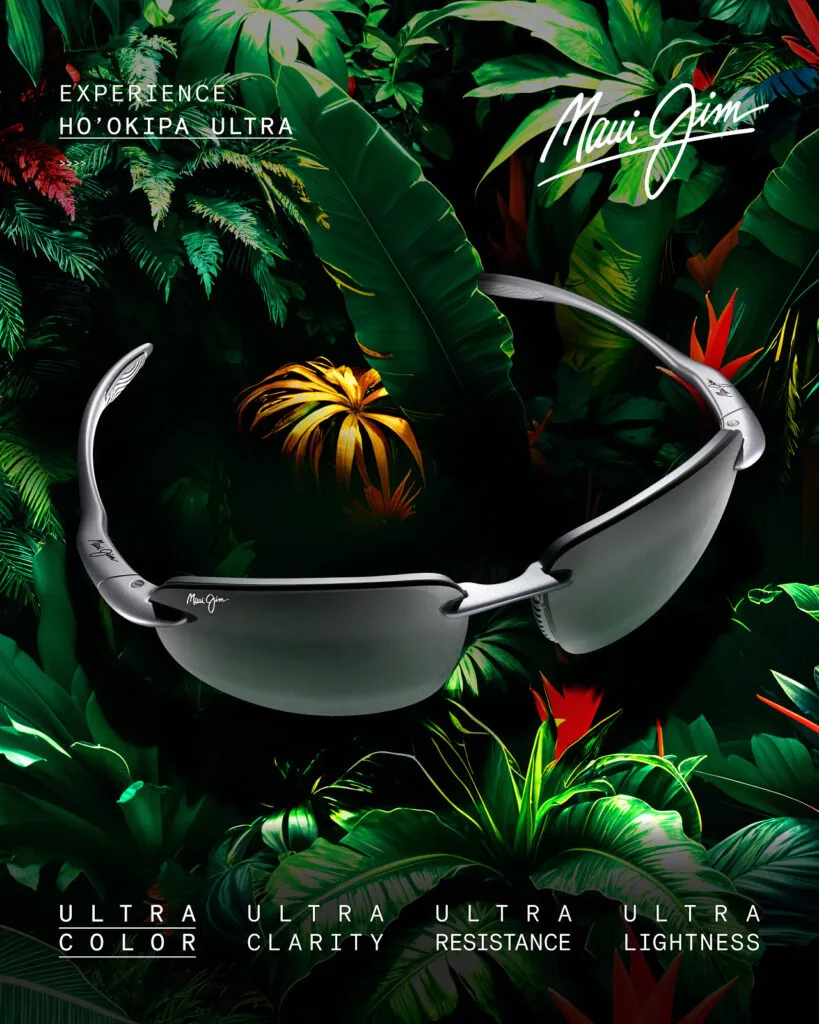
Tint matters too. Brown and bronze tints add contrast, which helps you pick a white ball out of the sky and see the shape of a green. Grey keeps colors truest and feels darkest in hard midday light. Our guide to Maui Jim prescription sunglasses walks through their lens colors, and Maui Jim makes polarized lenses in progressives as well as single vision, in many of their frames.
Choosing a frame that stays put through the swing
A golf frame needs to do three things: stay still when you turn, give the lens enough height for all three zones, and not slide when it warms up in the afternoon sun. A few things we look for:
- Enough lens depth. Very shallow frames squeeze the progressive corridor and push the reading zone into the spot you use for the ball.
- Moderate wrap. A little curve blocks side light. A deeply wrapped sport frame can limit stronger prescriptions, so we choose the frame and the lens together.
- Light weight and secure pads. Titanium styles and adjustable nose pads keep the frame steady and comfortable over eighteen holes.
- Temples that grip without pinching. We adjust them to your head so the frame stays put through the follow-through.
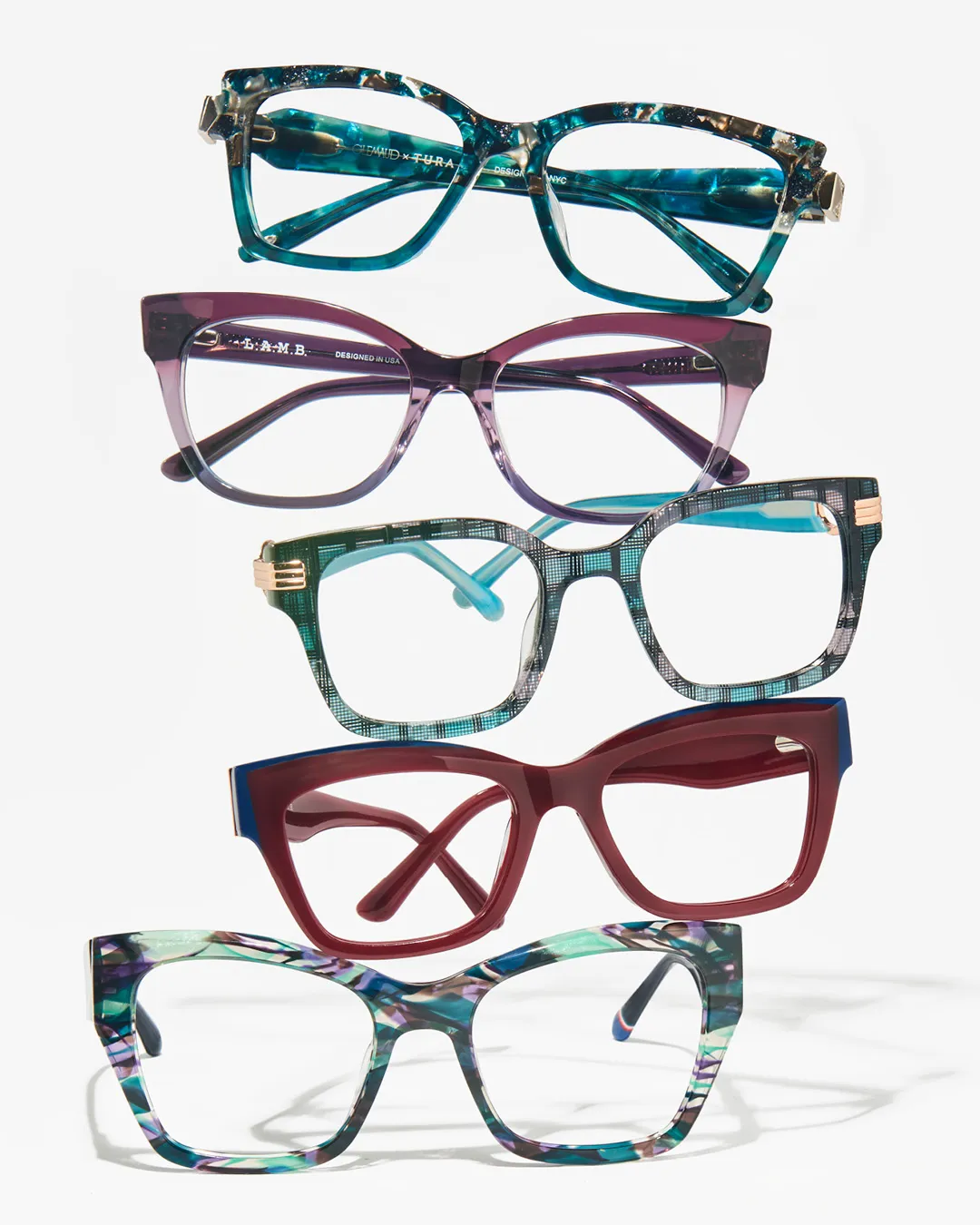
You can browse some of what we carry on our frames page, and our prescription sunglasses page covers the sun lens options in more detail.
Timing it for the season
Golf season in Scottsdale and Phoenix runs right through winter, which is when many of our winter visitors arrive with clubs in the trunk and last year's glasses in the console. Progressive lenses take longer to make than simple single vision, so it pays to come in early rather than the week before a member-guest. Bring a current prescription from your eye doctor. We are opticians, not optometrists, so we do not do eye exams, and if your vision has changed suddenly or you are seeing flashes, see your eye doctor promptly before ordering anything.
Come talk golf at Biltmore Plaza
Walk in to Tager Optical at the northwest corner of Biltmore Plaza, next to Safeway, with free parking out front. No appointment needed. Bring your current golf glasses if you have them, and your dog if you like, and tell Vince about your last round. He has heard every excuse and believes most of them. You can also text a photo of your prescription to (602) 799-1345 and we will let you know which options make sense before you come in. Directions and hours are on our visit page.